

How Clogged Gutters Can Quietly Destroy Your Foundation
Most homeowners in North Texas think of gutters as a roof accessory, something that keeps rain off the porch and away from the front door. The truth is far less glamorous and far more expensive. Your gutters are the first line of defense for the concrete slab your entire house sits on, and when they clog, that defense disappears without a single warning sign at the roofline. Water that should travel safely away from the house instead pours straight down the exterior wall and soaks into the soil within inches of the foundation. In the heavy clay soils common to Mansfield, Arlington, Burleson, and the rest of Tarrant and Johnson County, that concentrated soaking sets off a slow cycle of swelling and shrinking that pushes and pulls on the slab. The damage builds over seasons, not storms, which is exactly why it goes unnoticed until drywall cracks appear or a door stops latching. By that point, the repair bill has moved from a few hundred dollars of gutter work into thousands of dollars of structural correction. Understanding how clogged gutters cause foundation damage gives you the chance to stop the problem while it is still cheap and simple to fix.
How Clogged Gutters Damage Your Foundation in North Texas Clay Soil
The connection between a clogged gutter and a cracked slab comes down to soil chemistry. North Texas sits on expansive clay, a soil type that absorbs water like a sponge and expands as it does. When that same clay dries out during a hot Texas summer, it shrinks and pulls away from the concrete above it. Every home in the region deals with this movement to some degree, and a properly drained lot spreads the moisture change evenly around the perimeter. Clogged gutters break that balance by dumping hundreds of gallons in one narrow spot while the rest of the perimeter stays dry. Uneven moisture means uneven movement, and uneven movement is what cracks slabs, brick, and drywall. The roof itself never looks like the culprit, but it is where the water volume originates.
What Clogged Gutters Do to Foundation Soil During a Texas Summer
Summer in North Texas creates the worst possible conditions for a home with poor roof drainage. Weeks of triple digit heat bake the clay until it contracts, opening visible gaps between the soil and the edge of the slab. Those gaps can run several inches wide and travel a foot or more straight down along the foundation wall. When a July or August thunderstorm rolls through and drops an inch of rain in twenty minutes, a clogged gutter sends that water directly into the open crevice instead of carrying it to a downspout. The soil in that one location rehydrates violently while the soil ten feet away stays bone dry. That single spot swells and lifts the slab edge while the rest of the perimeter remains settled. Engineers call this differential movement, and it is the leading cause of foundation failure in the Dallas Fort Worth area.
The volume of water involved surprises most homeowners once they see the math. One inch of rain falling on a two thousand square foot roof produces roughly twelve hundred gallons of runoff. A functioning gutter system collects all of it and releases it through downspouts placed well away from the house. A clogged system releases that same twelve hundred gallons over the gutter lip in sheets, usually at the lowest point of the run and usually at an inside corner where two roof planes meet. Those corners already carry the highest concentration of runoff on the entire roof. Adding a blockage turns a manageable flow into a firehose aimed at your slab. Repeat that a few times each summer and the soil under that corner behaves nothing like the soil under the rest of the house.
The cycle then reverses when the heat returns. Clay that swelled during the storm dries out again over the following weeks and contracts back down, and the slab edge settles with it. Concrete tolerates compression far better than it tolerates bending, so repeated lifting and dropping fatigues the structure at predictable points. Hairline cracks widen slightly with each cycle and never close fully. Homeowners often report that cracks look worse in late summer and slightly better in spring, which is a textbook symptom of moisture driven movement. The gutters caused the imbalance, but the symptoms appear on interior walls and door frames far from the roof. Fixing the drainage is the only way to stop the cycle at its source.
Signs Clogged Gutters Have Already Started Damaging Your Foundation
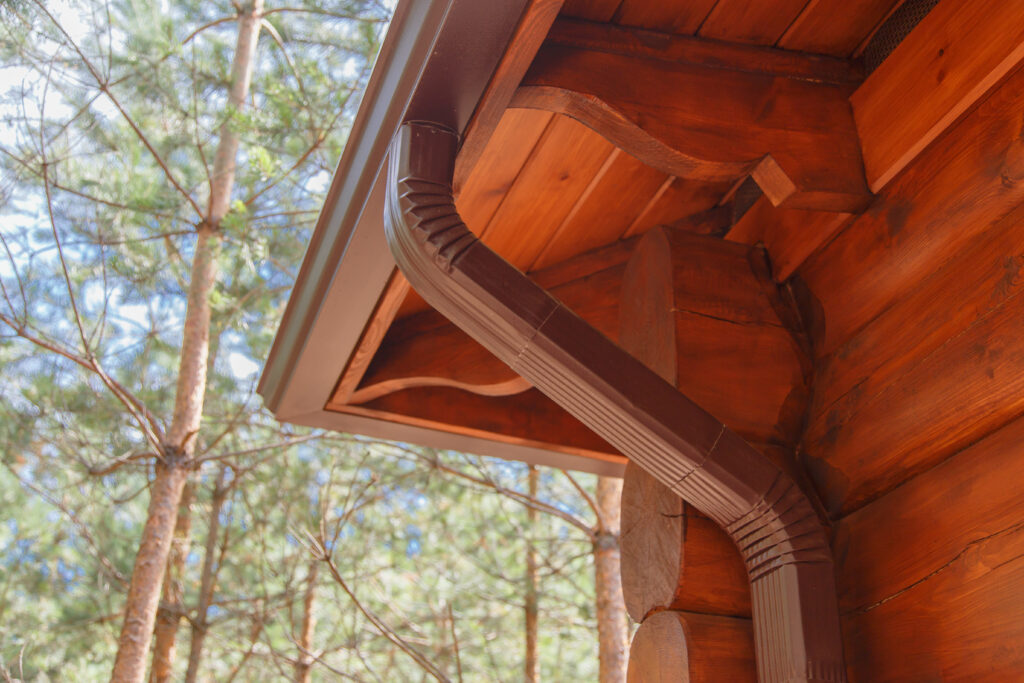
The earliest evidence usually shows up outside, and it is easy to spot once you know where to look. Walk the perimeter after a rainstorm and look for trenches, splash marks on the siding or brick, and eroded mulch beds directly below the gutter line. Soil that has been washed away from the base of the wall means water is landing there with force instead of traveling through the system. You may also see mud splashed several feet up the wall, staining brick and marking the exact spot where overflow is occurring. Landscaping in that area often struggles or drowns while plants elsewhere thrive. Standing water that lingers more than a day near the slab is a serious warning. These outdoor clues appear months or years before any interior damage becomes visible.
Inside the home, the symptoms are more familiar but rarely connected to the roof. Doors that stick in one season and swing freely in another indicate the frame is shifting with the slab beneath it. Diagonal cracks running from the corners of door frames and windows point toward foundation movement rather than normal settling. Gaps opening between baseboards and flooring, or between crown molding and the ceiling, tell the same story. Tile floors that crack in a straight line across a room usually sit above a slab that has flexed. Windows that suddenly resist opening after years of smooth operation deserve immediate attention. Any of these signs combined with overflow marks outside makes gutters the first thing to inspect.
The roof structure itself takes damage in the same process, which compounds the repair cost. Water sitting in a clogged gutter rots the fascia board behind it, and rotted fascia can no longer hold the gutter hangers securely. Once hangers pull loose, the gutter sags, holds even more standing water, and accelerates the decay. Overflow that runs behind the gutter soaks the roof deck edge, the drip edge, and eventually the first course of shingles. Soffit panels stain, warp, and open gaps that give wasps, squirrels, and rodents a path into the attic. Homeowners who wait often end up paying for fascia replacement, decking repair, gutter replacement, and foundation piers all at once. Catching the clog early keeps the problem confined to a simple cleaning.
How Clogged Gutters Turn Roof Runoff Into Foundation Pressure
Water pressing against a foundation is not a passive force. Saturated clay exerts what engineers call hydrostatic pressure, a lateral push against the concrete that increases with the amount of trapped moisture. Slab on grade homes, which make up the vast majority of houses in Mansfield and the surrounding cities, experience this pressure at the perimeter beam. The beam is the thickened edge of the slab that carries the exterior walls, and it is the most sensitive part of the entire foundation. Consistent saturation at one section of the beam pushes it out of alignment with the rest of the slab. Homes with pier and beam construction face a related issue, with crawl space moisture leading to wood rot and mold. Either way, the water arrives from the same place.
Slope and grading determine how much of that pressure your home absorbs. Building code guidance calls for the ground to fall at least six inches over the first ten feet away from the foundation, which moves surface water outward by gravity alone. Many older yards in North Texas have lost that grade over time as soil settles, flower beds get raised, and mulch builds up against the brick. A clogged gutter dumping onto flat or reverse graded soil has nowhere to send water except down along the foundation. Adding gutter capacity without fixing grade solves only half the problem. Conversely, perfect grading cannot handle the concentrated volume that a failed gutter system releases. The two systems work together or they fail together.
Tree cover raises the stakes considerably in established neighborhoods. Oak, pecan, and elm trees drop catkins in spring, leaves in fall, and small twigs year round, and all of it lands on the roof and washes into the gutters. Shingle granules shed naturally as a roof ages and settle into the same troughs, forming a heavy sludge at the bottom of the gutter. That sludge holds water, attracts more debris, and eventually forms a solid dam at the downspout opening. Downspout outlets are the narrowest point in the system, which makes them the first place a blockage forms and the hardest place to see one. A gutter can look clean from the ground while the outlet beneath it is completely sealed. Testing with a garden hose is the fastest way to confirm the system actually drains. Want your gutters checked before the next storm? Click here for our gutter services in Mansfield and across North Texas.
How to Stop Clogged Gutters From Destroying Your Foundation
Preventing foundation damage from clogged gutters costs far less than most homeowners expect. The work breaks down into three parts: keeping the troughs clear, moving discharged water far enough away from the slab, and replacing systems that are too small or too damaged to function. None of these requires guesswork, and all of them follow established standards used by roofing and gutter professionals. The goal is simple, which is to collect every gallon that lands on the roof and release it at a safe distance from the house. A system that does that consistently keeps perimeter soil moisture even through both drought and downpour. Even soil moisture means minimal slab movement, and minimal movement means no cracks. Getting there is a matter of maintenance and correct installation.
A Clogged Gutter Cleaning Schedule That Protects Your Foundation
Twice per year is the baseline cleaning frequency for most North Texas homes. The first cleaning should happen in late spring, after oaks finish dropping catkins and pollen strings that pack into gutters like felt. The second should happen in late fall or early winter, once deciduous trees have finished dropping leaves. Homes with heavy tree cover directly above the roofline often need three or four cleanings per year to stay ahead of the debris load. Properties with few trees can sometimes stretch to an annual service, though granule buildup still accumulates from the shingles themselves. Skipping a cycle is where trouble starts, since a single season of neglect is enough to seal a downspout outlet. Marking the schedule on a calendar removes the guesswork entirely.
Cleaning means more than scooping leaves out of the trough. Every downspout needs to be flushed and confirmed clear from the top opening all the way to the discharge point at the bottom. Underground drain lines that carry water to the curb or to a daylight outlet clog just as easily as the visible portions and are far harder to diagnose. Hangers should be checked for looseness, and any section that has pulled away from the fascia needs to be resecured. Seams and end caps deserve a look as well, since sealant fails over time and pinhole leaks drip directly onto the soil below. The fascia board behind the gutter should be probed for soft spots that indicate rot has started. A thorough service catches all of these items in one visit.
Safety is a real concern that leads many homeowners to hire out the work. Gutter cleaning requires ladder work at the roof edge, often on uneven ground, and frequently while handling wet debris. Ladder falls send tens of thousands of people to emergency rooms every year, and single story roofs account for a large share of those injuries. Steep roofs, two story elevations, and homes with landscaping that prevents stable ladder footing raise the risk further. A professional crew brings the right equipment, works from stable setups, and inspects the roof edge while they are up there. That inspection often catches loose shingles, damaged drip edge, or failing sealant that would otherwise go unnoticed. The cost of a service call is trivial next to a hospital visit or an unaddressed roof leak.
Downspout Extensions and Drainage That Keep Clogged Gutters From Reaching the Foundation
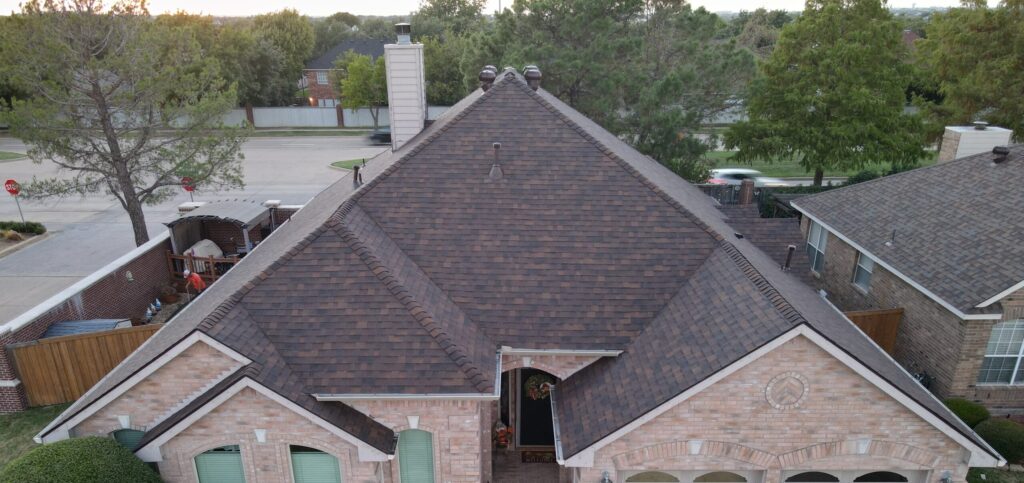
Clean gutters accomplish nothing if the downspouts release water at the base of the wall. Standard practice calls for discharging runoff at least four to six feet away from the foundation, and farther is better on lots with flat grade. Splash blocks are the minimum acceptable solution and work reasonably well on properties with good slope. Flexible or rigid extension pipes carry water considerably farther and cost very little to install. Buried drain lines running to a pop up emitter in the yard offer the cleanest look and the best performance, though they require periodic flushing to stay clear. Homes with persistent wet spots may need a French drain to intercept water before it reaches the slab. Matching the solution to the lot is what makes it effective.
Downspout sizing matters as much as downspout placement. Most residential systems use two by three inch downspouts, which handle the runoff from an average roof section without difficulty. Larger roof areas, steep pitches, and long gutter runs frequently overwhelm that size and need three by four inch downspouts instead. An undersized downspout backs up during heavy rain even when the trough is perfectly clean, producing overflow that looks exactly like a clog. Adding a second downspout to a long run often solves the problem more cheaply than replacing the entire system. Placement matters too, since a downspout should sit near the low end of each run and at every major inside corner. Roof valleys that dump into a single gutter section almost always need extra drainage capacity.
Grading and landscaping around the discharge point complete the picture. Water released four feet from the house does no good if it flows back toward the slab across a low spot in the yard. Flower beds built up against the brick trap moisture right where you least want it and should be regraded to slope away. Mulch piled above the weep holes in a brick wall blocks the drainage path the wall depends on and holds water against the structure. Concrete patios and driveways that have settled toward the house channel runoff straight to the foundation and may need mudjacking or replacement. Sprinkler systems add to the total moisture load and should be adjusted so heads do not spray the wall or oversaturate the perimeter. Managing all of these sources together is what keeps soil moisture stable year round.
When Clogged Gutters Mean You Need Gutter Replacement, Not Just Cleaning
Some gutter systems clog repeatedly because they were never sized or installed correctly. Five inch K style gutters handle the majority of residential roofs in North Texas and remain the standard for good reason. Homes with large roof areas, steep pitches, or multiple valleys converging into one run often need six inch gutters with matching three by four inch downspouts. Sectional gutters sold at home improvement stores rely on joints every ten feet, and every joint is a leak point and a debris catcher. Seamless gutters formed on site eliminate those joints across the entire run and dramatically reduce clog points. Upgrading capacity solves overflow problems that no amount of cleaning will fix. An honest assessment tells you which category your system falls into.
Physical condition determines the rest. Gutters that sag between hangers hold standing water, which breeds mosquitoes and accelerates corrosion from the inside out. Hangers should sit twenty four to thirty six inches apart, and older systems using spike and ferrule fasteners commonly work loose as the fascia wood expands and contracts. Proper pitch runs about a quarter inch of fall for every ten feet of gutter, enough to move water without being visually obvious. Sections that have separated from the fascia, show rust perforation, or have been dented by hail rarely justify repair. Gutters damaged in a hailstorm may also qualify for coverage under a property insurance claim, especially when the roof was struck at the same time. A trained contractor documents both together.
Gutter guards deserve honest discussion because they are frequently oversold. Quality micromesh systems substantially reduce the volume of leaves and twigs entering the trough and extend the interval between cleanings. They do not eliminate maintenance, since fine debris, pollen, and shingle granules still accumulate on top of and beneath the mesh. Cheap foam inserts and plastic screens often make matters worse by trapping debris in place where it composts and blocks flow entirely. Guards installed under the shingles can also void a roof manufacturer warranty when done improperly, which is a real risk with inexperienced installers. Choosing the right product and installing it correctly requires someone who works on roofs every day. Done well, guards are a strong investment for homes under heavy tree cover. Is your roof edge showing damage from overflowing gutters? Click here for our roofing services and schedule a free inspection.
Why You Need a Roofing and Gutter Contractor Before Foundation Damage Starts
Foundation repair is one of the most expensive corrections a homeowner in North Texas can face. Pier installation on a settled slab commonly runs into several thousand dollars, and larger jobs climb well past ten thousand once interior repairs, plumbing tests, and landscaping restoration are included. Gutter cleaning, downspout extensions, and even full seamless gutter replacement cost a small fraction of that. The math strongly favors prevention, and the window for prevention lasts years if you act on the early signs. A contractor who works on roofs, gutters, and exteriors sees how all of these systems interact and catches problems a single trade specialist would miss. That perspective is what keeps a minor drainage issue from becoming a structural one.
Why a Gutter Inspection Beats Foundation Repair Costs
A professional gutter and roof drainage inspection takes under an hour and covers far more than the visible trough. The inspector checks downspout flow, hanger security, gutter pitch, seam integrity, fascia condition, and discharge distance from the foundation. They also examine the drip edge, roof deck edge, and first courses of shingles for water damage caused by overflow. Perimeter soil conditions, grading, and landscaping get evaluated at the same time since they determine where collected water ends up. The result is a clear picture of the entire path water takes from the roof to the yard. Finding one blocked downspout during that visit can prevent years of uneven soil moisture. That is a strong return for a free inspection.
Timing the inspection well makes it more valuable. Late summer is an ideal moment in North Texas because the clay has already contracted from months of heat and any drainage flaw will show itself the moment fall storms arrive. Debris from spring growth has settled into the troughs by now and downspout outlets are at their most likely to be blocked. Scheduling before the fall storm season means corrections are in place when the rain returns. Homeowners who wait until they see interior cracks have skipped the cheap part of the process entirely. Getting ahead of the season is the whole point.
Documentation from an inspection also has value beyond the immediate repair. Photos of gutter condition, roof edge damage, and storm impact create a record that supports an insurance claim later. Hail and wind events in Tarrant, Johnson, and Ellis County frequently damage gutters at the same time they damage roofs, and adjusters review both. Records showing consistent maintenance strengthen a claim and undercut any argument that damage resulted from neglect. Keeping a simple file of service dates and inspection reports protects you financially. It costs nothing to start.
What to Expect From a Professional Gutter and Roof Drainage Estimate
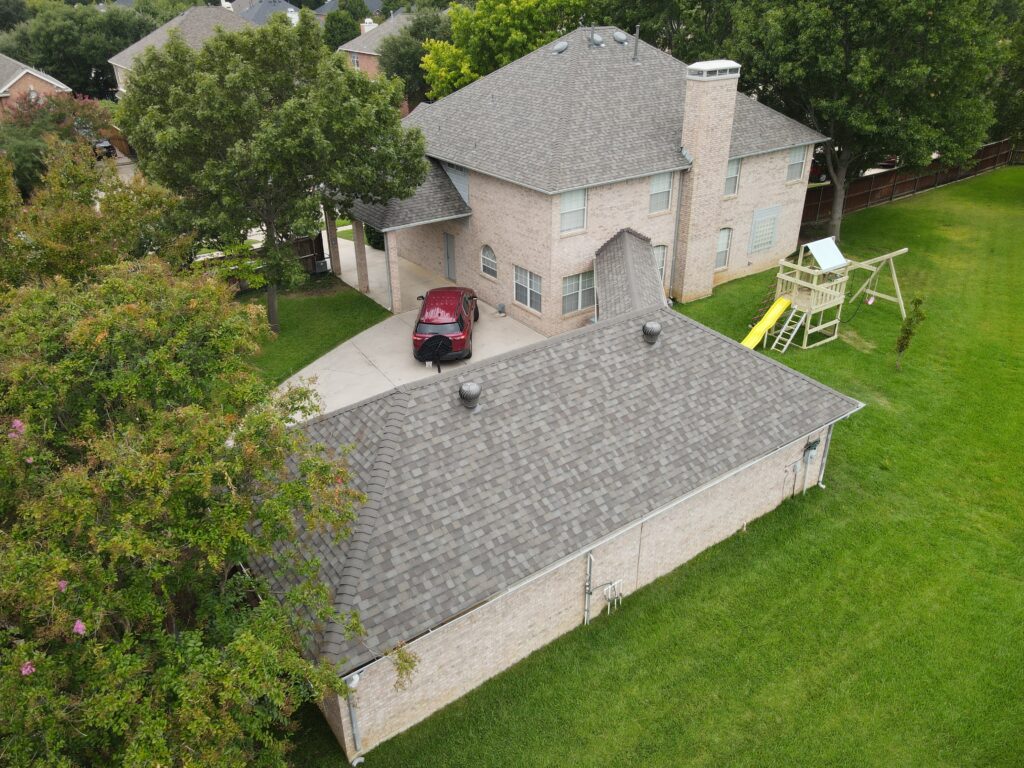
A good estimate starts with measurement rather than assumption. The contractor measures total gutter footage, counts corners, evaluates roof area draining into each section, and calculates the capacity the system actually needs. That calculation determines gutter size, downspout size, and downspout placement, and it is the step most low bid installers skip. You should receive a written scope explaining what will be installed, what material and gauge will be used, and where each downspout will discharge. Color options, hanger type, and fastener spacing should all be specified in writing. Clear documentation makes comparing bids straightforward. Vague estimates almost always hide corners being cut.
Expect the estimate to address related exterior components as well. Rotted fascia must be replaced before new gutters go up, since new hangers cannot hold in soft wood. Damaged soffit, loose drip edge, or deteriorated roof decking at the eave all need correction as part of the same project. Siding that has been stained or swollen by years of overflow may need attention too, and addressing it during the same visit saves a second mobilization cost. A contractor who ignores these items is setting up the new gutters to fail early. Honest estimates account for what is actually there.
Timeline and warranty terms round out a complete proposal. Most residential seamless gutter installations finish in a single day once materials arrive. You should know exactly what the labor warranty covers and how long it lasts before signing anything. Manufacturer warranties on materials are separate and carry their own terms that a good contractor will explain plainly. Payment schedules should be reasonable, with no demand for full payment before work begins. A company confident in its work has no problem putting all of this in writing.
Why Choose KG Roofing & Renovations for Gutter Installation in Mansfield, TX
KG Roofing & Renovations holds an A+ rating with the Better Business Bureau and serves homeowners throughout Mansfield, Arlington, Burleson, Cedar Hill, Midlothian, Waxahachie, and the surrounding communities. We are a preferred contractor for both IKO and Owens Corning, which reflects years of consistent installation quality reviewed by the manufacturers themselves. Every replacement job we complete carries a four year labor warranty, and every project starts with a free, no obligation estimate. We handle gutters, roofing, siding, and full exterior work, so drainage problems get evaluated as part of a complete system rather than in isolation. That approach catches the fascia rot, the failing drip edge, and the misplaced downspout in one visit. Our roof repairs are also paid forward, with full credit applied toward a future replacement.
We built the company around straight answers instead of pressure. When a gutter cleaning will solve your problem, we tell you that, and we do not push a replacement you do not need. When your system is undersized and will keep overflowing regardless of maintenance, we show you the measurements behind that conclusion. Storm damage claims get documented thoroughly so you have what you need when the adjuster arrives. Local knowledge matters here, since North Texas clay behaves very differently from soil in other parts of the country. We install drainage that accounts for how this ground actually moves.
Protecting your foundation starts with the water coming off your roof, and that is a fixable problem on nearly every home. If you have seen overflow marks on your brick, eroded soil at the wall, or doors that suddenly stick, now is the time to have the system looked at. Interested in a full exterior evaluation? Click here for our siding services and see how we handle complete exterior protection. Call KG Roofing & Renovations at (817) 368-5115 or email info@kgroofs.com to schedule your free inspection, and let us make sure every gallon that hits your roof ends up somewhere safe.