

Why Your Home Loses So Much Heat Through Old Windows
Old windows are one of the largest energy leaks in a North Texas home, and most homeowners never notice it happening. Glass, frames, and seals all break down over time, and once they do, your conditioned air starts moving through the wall assembly instead of staying inside. In winter that shows up as heat loss, with warm air draining out through thin glass and gaps around the sash. In summer it runs the opposite direction; cooled air escapes while radiant heat pours in through uncoated glass, which is exactly what North Texas homeowners feel in July. The Department of Energy estimates that windows account for roughly 25 to 30 percent of residential heating and cooling energy use. That is a very large share of your utility bill tied to a component many people ignore for thirty years or more. Understanding how old windows move heat helps you decide what to seal, what to repair, and what to replace outright. This guide walks through the physics behind the loss, the warning signs inside your house, and the fix that actually solves it.
How Old Windows Lose Heat in Your Home
Heat always moves toward cold, and windows give it the shortest path available. A wall in a typical Texas home carries insulation rated near R13 to R21, while a single pane of glass sits close to R1. That difference means the window is the weakest thermal point in the entire exterior of your house. Old windows compound the problem with failed seals, conductive metal frames, and gaps that let outside air move freely through the opening. Every one of those failures adds up across a whole house. A home with fifteen aging windows can be losing conditioned air through more effective open area than a door left standing wide. The loss is constant, running every hour your HVAC system is working. Knowing the three main paths of loss makes the problem far easier to solve.
Glass Problems That Make Old Windows Lose Heat
Glass is the largest surface of any window, so it drives most of the heat transfer. A single pane of clear glass has an R value near 1, which is almost no resistance at all. Heat conducts straight through it and radiates off the interior surface into your room. In winter, that cold glass surface pulls warmth out of nearby air and creates a chilly zone several feet into the room. In summer, the same glass turns into a radiant heater, throwing warmth at your furniture, your floors, and you. Many homes built in the Mansfield and Arlington area before the mid 1990s still carry original single pane units. Those windows were never designed for the energy codes we live under today. Replacing that glass with an insulated assembly is the single largest thermal upgrade available on the exterior of most houses.
Double pane windows solve part of the problem by trapping a sealed air or argon gas space between two panes of glass. That gas space slows conduction and roughly doubles the R value of the window. The trouble is that the seal holding it together does not last forever. Insulated glass units typically carry seal warranties in the ten to twenty year range, and failure rates climb sharply past that mark. Once the seal fails, argon escapes, moisture enters, and the window fogs between the panes. That fog is not cosmetic; it is proof the insulating gas is gone and the unit is now performing closer to plain glass. Mineral deposits often etch the inside surfaces permanently once condensation cycles begin. A window with visible fogging has already lost the majority of its energy value.
Coatings matter even more in Texas than raw insulation numbers do. Low emissivity coatings are microscopically thin metallic layers that reflect radiant heat back toward its source. In our climate zone, the number to watch is the solar heat gain coefficient, which measures how much solar energy passes through the glass. ENERGY STAR guidelines for the southern climate zone call for a U factor of 0.40 or lower and a solar heat gain coefficient of 0.25 or lower. Older windows have no coating at all, so west facing rooms bake every afternoon from three o’clock until sundown. Aftermarket films help slightly, though they cannot fix conduction through the frame or the loss of a sealed gas space. Film also voids many glass warranties and can cause thermal stress cracks on older panes. Ready to stop paying to cool your front yard? Click here for our window replacement service.
Frame and Seal Failures That Make Old Windows Lose Heat
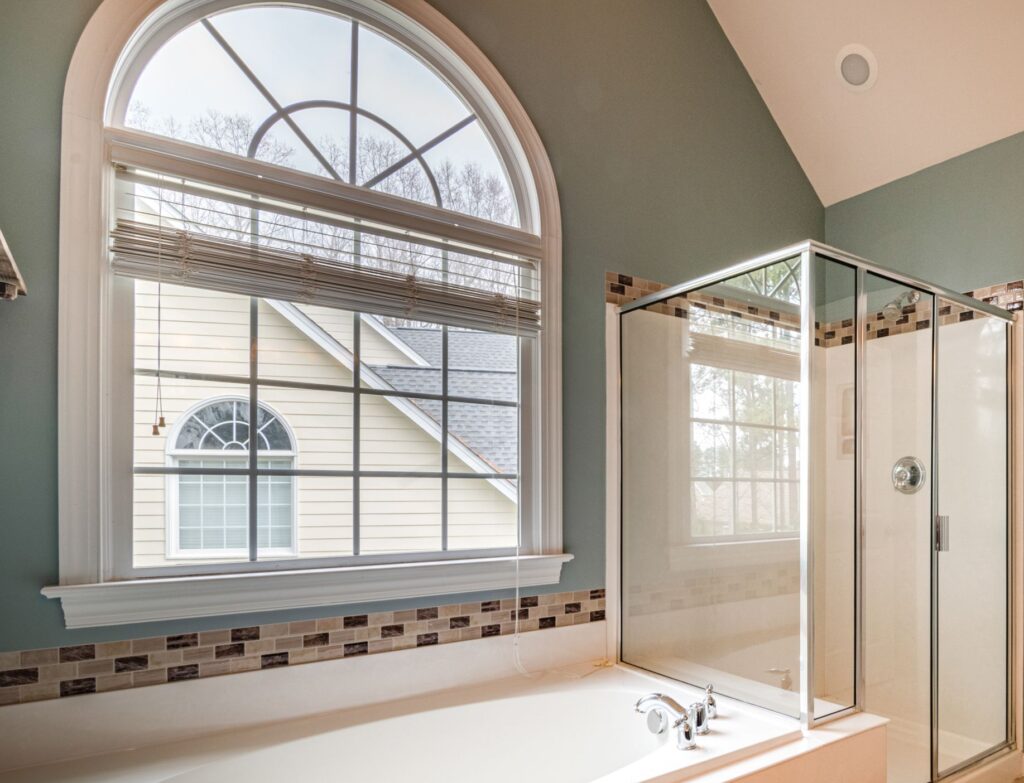
The frame is the second major path for heat movement, and aluminum is the worst offender. Aluminum conducts heat roughly 1,000 times faster than vinyl or wood does. Thousands of homes across Tarrant, Johnson, and Ellis counties were built with aluminum frame windows from the 1970s through the early 1990s. Those frames create a thermal bridge, pulling outdoor temperature straight through the wall line and into your living space. You can feel it by touching the metal on a hot afternoon; the frame is nearly as warm as the air outside. In winter the same bridge produces condensation along the bottom rail, which then drips onto the sill and the wall below. Repeated wetting rots the sill plate, stains drywall, and eventually feeds mold growth inside the wall cavity. No amount of caulk or weatherstripping corrects a conductive frame, because the loss is happening through solid metal.
Wood frames fail differently but just as expensively. Glazing putty dries out, shrinks, and cracks away from the glass, opening a direct air path around every pane. Sash cords and spiral balances break, leaving windows that will not stay closed tightly against the stop. Moisture works into the end grain at the sill and the lower rail, and rot spreads quietly behind layers of paint. A wood window that has been painted eight or nine times often has hardened joints and gaps that no longer align. Once rot reaches the structural members of the frame, patching becomes throwing money at a component that will fail again in two years. Water that gets past a rotted sill also travels down inside the wall, damaging insulation and sheathing along the way. That hidden damage often costs more to repair than the window itself.
Vinyl frames are common on 1990s and 2000s replacement jobs, and lower quality units age poorly in Texas heat. Vinyl expands and contracts with temperature swings, and our region routinely runs a 60 degree range between a January morning and a July afternoon. Thin walled vinyl with weak corner welds eventually racks out of square, and the sash stops sealing against the frame. Sun exposure makes older vinyl brittle and chalky, especially on south and west elevations. Locking hardware loosens, and a lock that does not draw the sash tight leaves a continuous gap along the meeting rail. Balances wear out, causing sashes to sag just enough to break the weatherstrip contact. Quality modern vinyl uses multiple internal chambers, fusion welded corners, and reinforced meeting rails to prevent all of this. The material is not the problem; the grade of the product and the quality of the installation are.
Air Leaks That Make Your Home Lose Heat Through Old Windows
Air leakage is the loss homeowners feel first and understand least. Weatherstripping is a wear item, and the foam, felt, or vinyl bulb seals in a thirty year old window have long since compressed flat or fallen out. When those seals go, air moves freely between the sash and the frame every time the wind blows. Modern windows carry an air leakage rating, and quality units test at 0.3 cubic feet per minute per square foot or lower. An old, worn window can leak many times that amount without any visible gap at all. Blower door testing regularly shows window perimeters as a top three source of total house leakage. On a windy North Texas day, that leakage forces your system to condition outdoor air continuously. You are paying to heat or cool air that is already on its way back outside.
The second leakage path sits hidden behind the interior trim. When windows are installed, a gap is intentionally left between the window frame and the rough opening framing so the unit can be shimmed square. That gap is supposed to be filled with low expansion foam or backer rod and sealant. On older homes it was frequently stuffed with a wad of fiberglass batt or left completely empty. Fiberglass slows heat but does nothing to stop air movement, so the cavity becomes an open channel from the wall to the room. Stack effect then pulls cool air in at ground floor windows and pushes warm air out at upper floor windows all day long. Exterior perimeter caulk fails too, cracking and pulling away from brick or siding after ten to fifteen years of UV exposure. Two dollars of failed sealant can undo hundreds of dollars of insulation performance.
Windows also do not exist in isolation on the wall. They tie directly into your siding, your housewrap, and your flashing details, and a failure in one shows up in another. Missing or reversed head flashing above a window lets water run behind the siding and into the framing. Once the sheathing stays wet, insulation compresses, loses R value, and stops resisting heat transfer at all. Damaged siding around openings gives wind driven rain an entry point that eventually reaches the window frame from behind. That is why a real energy assessment looks at the entire wall assembly rather than just the glass. Correcting the window without correcting the surrounding envelope leaves half the problem in place. If your siding is aging alongside your windows, click here for our siding services and address the whole wall at once.
Signs Your Home Is Losing Heat Through Old Windows
You rarely need special equipment to confirm that your windows are the problem. The symptoms show up in comfort, in your utility bills, and in visible damage around the openings. Most homeowners notice one or two of these signs and assume the HVAC system is undersized or failing. In many cases the equipment is working perfectly and simply losing a race against the building envelope. Checking your windows first is faster and cheaper than replacing a functioning air conditioner. A careful walkthrough of your house takes about twenty minutes. Here is what to look for, room by room and bill by bill. Catching these signs early also keeps water damage from spreading into framing and drywall.
Comfort Signs Your Home Is Losing Heat Through Old Windows
Temperature differences between rooms are the clearest comfort clue. A room with three old windows will run several degrees off from an interior room on the same thermostat zone. West facing bedrooms in North Texas often sit five to ten degrees warmer than the rest of the house during summer afternoons. In winter, those same rooms turn into the coldest spaces in the home. Family members who avoid one particular room are usually reacting to window driven temperature swings. Furniture placement tells the story too; if nobody sits near the front windows, there is a reason. Standing a foot from the glass and feeling a distinct change in temperature confirms poor thermal performance. That sensation is radiant transfer, and no amount of curtains will fully block it.
Drafts are the second comfort signal, and they are easy to test yourself. Hold a lit incense stick or a thin strip of tissue near the sash edges and the meeting rail on a windy day. Visible movement means air is passing through the assembly. Check the lock area, the bottom rail, and the corners where the frame meets the wall. Run the same test with your bathroom and kitchen exhaust fans on, since depressurizing the house exaggerates leaks. Cold air pooling near the floor below a window in January points to convection off cold glass rather than a true air leak. Both problems raise your energy use, though they call for different fixes. Sealing helps drafts; only better glass helps convection.
Noise is an underrated indicator that most people overlook entirely. Sound and air travel through the same openings, so a window that transmits traffic noise is transmitting air as well. Homes near Broad Street, Highway 287, or any busy corridor notice this immediately. Modern insulated units with laminated or varied thickness glass cut sound transmission substantially. If you can hear conversations from the sidewalk clearly through a closed window, the assembly is not sealing. Condensation on the interior glass during cold snaps is another red flag, because it means the interior surface is dropping to dew point temperature. Ice forming at the bottom of the glass is a severe version of the same failure. Both point to inadequate insulating value in the glass package.
Energy Bill Signs Your Home Is Losing Heat Through Old Windows
Your utility bill is the most objective evidence available, and it is already sitting in your inbox. Pull twelve to twenty four months of statements and compare kilowatt hour usage rather than dollar amounts, since rates fluctuate. Look at the ratio between your summer peak and your spring shoulder months. A house with a tight envelope shows a moderate climb; a leaky house shows a steep spike in June and July. Comparing your usage per square foot against neighbors in similar aged homes gives useful context. Many Texas utility providers publish this comparison directly on the bill or in the online portal. Consistently landing in the high range points to envelope losses rather than habits. Windows are usually the largest single contributor in a home built before modern energy codes.
Run time is the second measurable clue. An air conditioner that never seems to cycle off during afternoon hours is fighting a continuous heat load. Smart thermostats log run time by day and by hour, giving you hard data instead of guesswork. Compare a mild day in April against a hot day in July to see how steeply the load climbs. Systems that cannot hold setpoint in the late afternoon are frequently losing to solar gain through uncoated glass. Homeowners often respond by lowering the thermostat, which increases run time further and accelerates equipment wear. Fixing the load at the window solves the root cause instead of masking it. Reduced run time also extends the service life of the compressor.
Payback math is worth running before you commit to anything. Replacement windows with proper southern climate ratings commonly reduce heating and cooling costs by 10 to 25 percent, depending on what they replace. Swapping single pane aluminum for insulated low E vinyl produces the largest measurable jump. Going from a decent 2005 double pane unit to a premium modern one produces far smaller savings. Energy performance is only one part of the return; comfort, noise reduction, and resale value all factor in. Rooms that were previously unusable in summer become usable again, which changes how you live in the house. Interior fading of floors, art, and upholstery slows dramatically with low E coatings. Curious what upgrades make sense for your home? Click here to explore our home remodeling services.
Physical Damage Signs Your Home Is Losing Heat Through Old Windows
Visible damage around a window usually means the loss has been happening for years. Fogging or a milky haze between the panes proves the insulated glass seal has failed. Water stains on the sill, the apron, or the wall directly under the window signal active intrusion. Peeling or bubbling paint on interior trim points to moisture moving through the assembly. Soft wood at the corners of the sill means rot has already started, and rot travels farther than it appears from the surface. Press a screwdriver tip gently into suspect areas; solid wood resists, and compromised wood gives way. Any of these findings should move a window from the repair list to the replacement list. Delaying only allows the damage to spread into framing that costs far more to fix.
Operational problems are damage too, even when nothing looks broken. Windows that stick, will not stay open, or require force to lock have shifted out of square. That racking opens gaps you cannot see but can definitely feel. Cracked or missing glazing bead lets both air and water reach the edge of the glass. Loose or wobbly sashes have worn balances and no longer compress the weatherstrip. Broken locks are a security issue as much as an energy issue, since an unlocked sash never seals fully. Screens that are torn or missing suggest the whole unit has been neglected for a long time. Egress matters too; bedroom windows must open properly for emergency escape.
Look at the exterior as well, because that is where the water management happens. Cracked, gapped, or missing caulk between the frame and the brick or siding is a direct entry point. Rust streaks below aluminum frames mean fasteners are corroding inside the assembly. Mortar cracking at the window head can indicate settlement or a failed lintel. Check the flashing above the window, since water always travels down and finds every weakness on the way. Damage there frequently traces back to roof or gutter problems that are dumping water in the wrong place. Overflowing gutters send sheets of water down the wall and straight over window heads. If water is running where it should not, click here for our roofing services and get the top of the house evaluated first.
Why You Need Professional Window Replacement to Stop Heat Loss Through Old Windows
At some point, sealing and patching stops producing results. Old windows fail at the glass, the frame, and the perimeter all at once, and no single repair addresses all three. Replacement with properly rated units corrects conduction, radiant gain, and air leakage together. Installation quality matters as much as product quality, because a premium window installed poorly still leaks. Correct flashing, insulation, and sealing at the opening are what turn a good product into real savings. Working with a licensed, insured local contractor protects both your home and your warranty.
What Professional Window Replacement Does to Stop Heat Loss Through Old Windows
A proper replacement starts with selecting glass built for the Texas climate rather than a national average. That means low E coatings tuned for solar control, a low solar heat gain coefficient, and argon filled insulating spaces. Warm edge spacers reduce conduction at the perimeter of the glass, where most condensation forms. Insulated frames with multiple internal chambers eliminate the thermal bridging that aluminum creates. Together these elements can cut window heat transfer by more than half compared to old single pane units. Every unit we install carries an NFRC label listing its verified performance numbers, so you know exactly what you are buying.
Installation is where the energy savings are either captured or lost. The rough opening is inspected, damaged framing is repaired, and the sill is flashed before the new unit goes in. Windows are shimmed plumb, level, and square so the sash seals evenly along its entire perimeter. The gap between frame and framing is filled with low expansion foam that seals air without bowing the frame. Exterior perimeters get properly tooled sealant compatible with brick, stucco, or siding. Interior trim is refit so the finished result looks intentional rather than patched.
Full frame replacement and insert replacement serve different situations. Insert units fit inside the existing frame and work well when that frame is sound, dry, and square. Full frame replacement removes everything down to the studs and is the right call when rot, water damage, or severe racking exists. Inserts cost less and install faster, though they reduce the visible glass area slightly. Full frame work costs more and delivers a complete reset of the opening, including new flashing and insulation. An honest contractor will tell you which one your house actually needs.
What to Expect During Window Replacement That Stops Heat Loss
The process begins with a free, no obligation estimate at your home. We measure every opening individually, since houses settle and no two openings are ever identical. We inspect the surrounding wall, trim, and flashing for hidden water damage before quoting anything. You receive a written scope listing the exact products, performance ratings, and installation details included. There are no vague line items and no pressure to decide on the spot. Custom windows typically take a few weeks to build after the order is placed.
Installation day moves faster than most homeowners expect. A typical crew completes eight to twelve windows in a single day on a standard home. We protect flooring and furniture, work one opening at a time, and never leave an opening exposed overnight. Old units are removed carefully to avoid damaging brick, siding, and interior trim. Debris is cleaned up as we go, and magnetic sweeps catch fasteners in the yard. Most families stay home comfortably throughout the project.
After installation we walk every window with you before we consider the job finished. We demonstrate operation, locking, and cleaning features on each unit. We verify sealant lines, check trim reveals, and confirm that every sash operates smoothly. You receive manufacturer warranty documentation along with our own labor coverage in writing. Any punch list item gets scheduled immediately rather than left open. Registration of manufacturer warranties is handled for you so nothing lapses on a technicality.
Why Choose KG Roofing & Renovations for Window Replacement That Stops Heat Loss
KG Roofing & Renovations holds an A+ rating with the Better Business Bureau, earned through consistent workmanship and straight answers. We are a preferred contractor for IKO and Owens Corning, a status manufacturers grant only to companies that meet strict installation and service standards. Every replacement job we complete carries a 4 year labor warranty on top of manufacturer coverage. Estimates are always free and always no obligation. We serve homeowners throughout Mansfield, Arlington, Burleson, Midlothian, Cedar Hill, and communities across the Dallas Fort Worth area.
Working with one contractor across your entire exterior saves you money and prevents finger pointing. We handle windows, siding, gutters, and roofing, which means the water management details connect correctly at every transition. Roof repairs we perform are paid forward, with full credit applied toward a future replacement. That policy exists because we would rather earn a long relationship than a single invoice. Our crews are local, our office answers the phone, and our estimators show up when they say they will.
Old windows quietly drain money from your household every single month of the year, in July as much as in January. The fix is permanent, measurable, and adds real value to your property. Schedule your free estimate today and find out exactly what your windows are costing you. Call KG Roofing & Renovations at (817) 368-5115, email info@kgroofs.com, or visit us at 1906 Lone Star Rd Suite B, Mansfield, TX 76063. Ready to stop losing heat through old windows? Click here for our window replacement service and get started.